By the Dimpal Sharma· Published 26 October 2026 · Updated 29 October 2026 · 8 min read
What is Pantone color?
Why does Pantone exist?
How is Pantone different from CMYK?
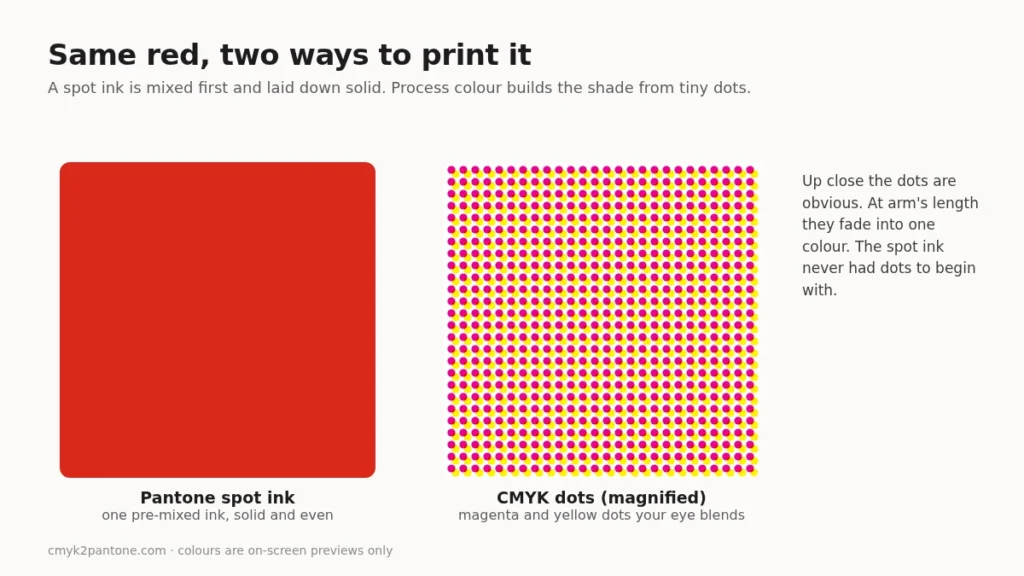
What do the letters after the number mean?
This trips people up more than almost anything else. Ink sits on top of coated paper, so it looks bright and deep. It sinks into uncoated paper, so it looks softer. If your brand guide says 300 C and you print on a recycled uncoated stock, you'll get something different, and it won't be the printer's fault.
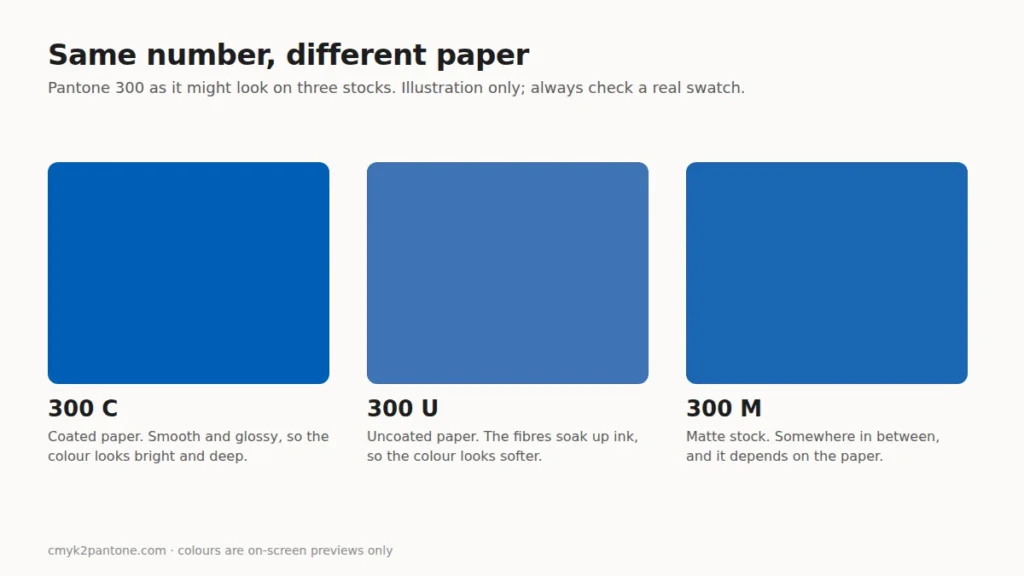
My advice: pick the letter on purpose. Don't let it be an accident.
Why do brands rely on Pantone?
How many Pantone colors are there?
Can you convert Pantone to CMYK?
Mistakes worth avoiding
Frequently asked questions
What is Pantone color?
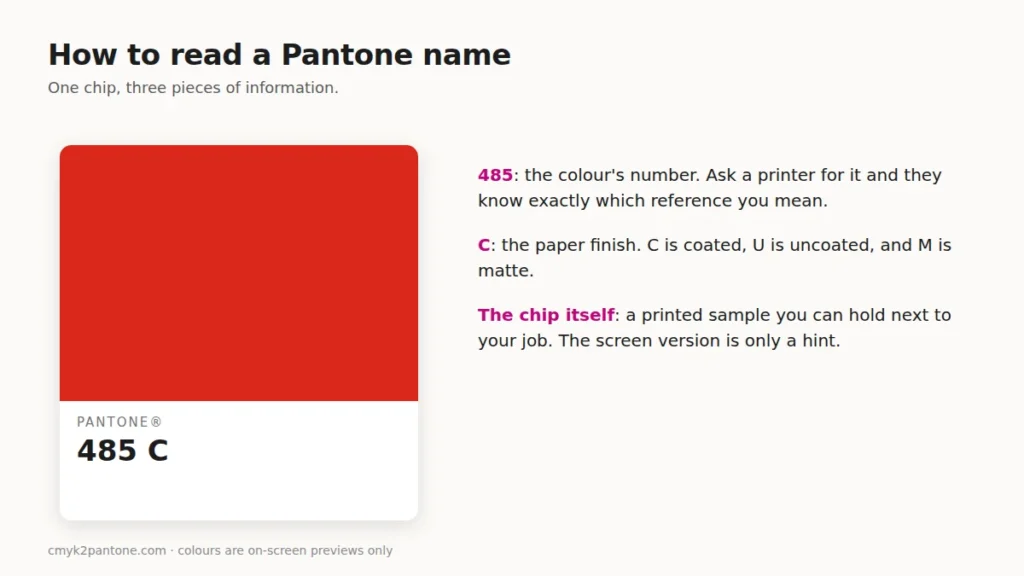
A standardized colour reference system from Pantone LLC. Each colour has a number, and many are printed as pre-mixed spot inks.
What does the C, U or M after a Pantone number mean?
The paper finish. C is coated, U is uncoated and M is matte. The same number looks different on each.
Is Pantone the same as CMYK?
No. CMYK builds colour from four process inks in dots. Pantone is a reference library, and many of its colours print as single pre-mixed inks.
Why do brands use Pantone colors?
A Pantone number gives every printer the same target, which keeps a brand colour steady across materials.
Can every Pantone color be converted to CMYK?
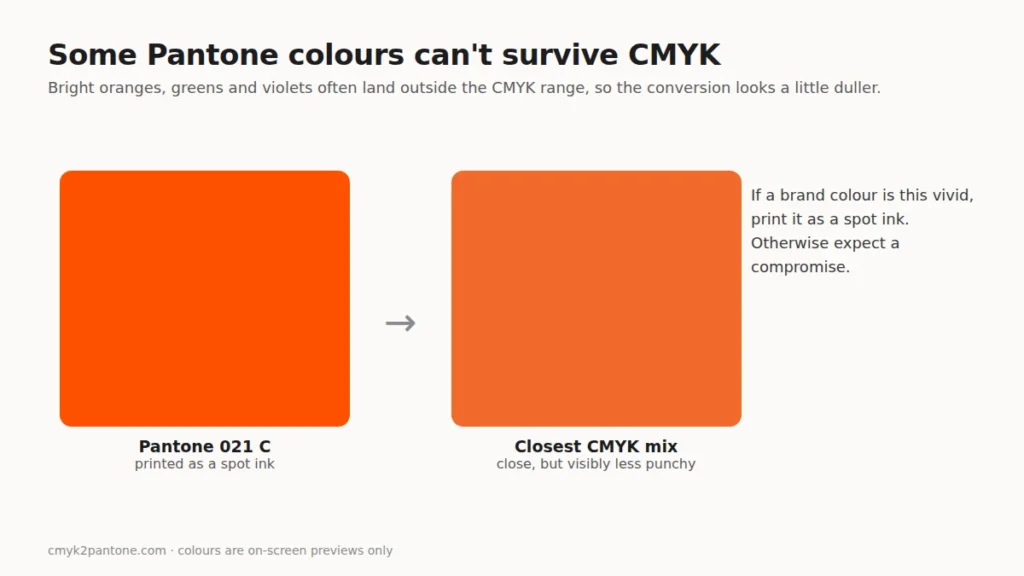
Only approximately. Very bright shades can fall outside the CMYK range and look duller once converted.
Is Pantone more expensive than CMYK?
Usually. A spot colour typically needs an extra ink or plate, which adds cost to a standard four-colour run.